
Her Majesty Queen Elizabeth II – A Life of Service, Stability and Quiet Strength
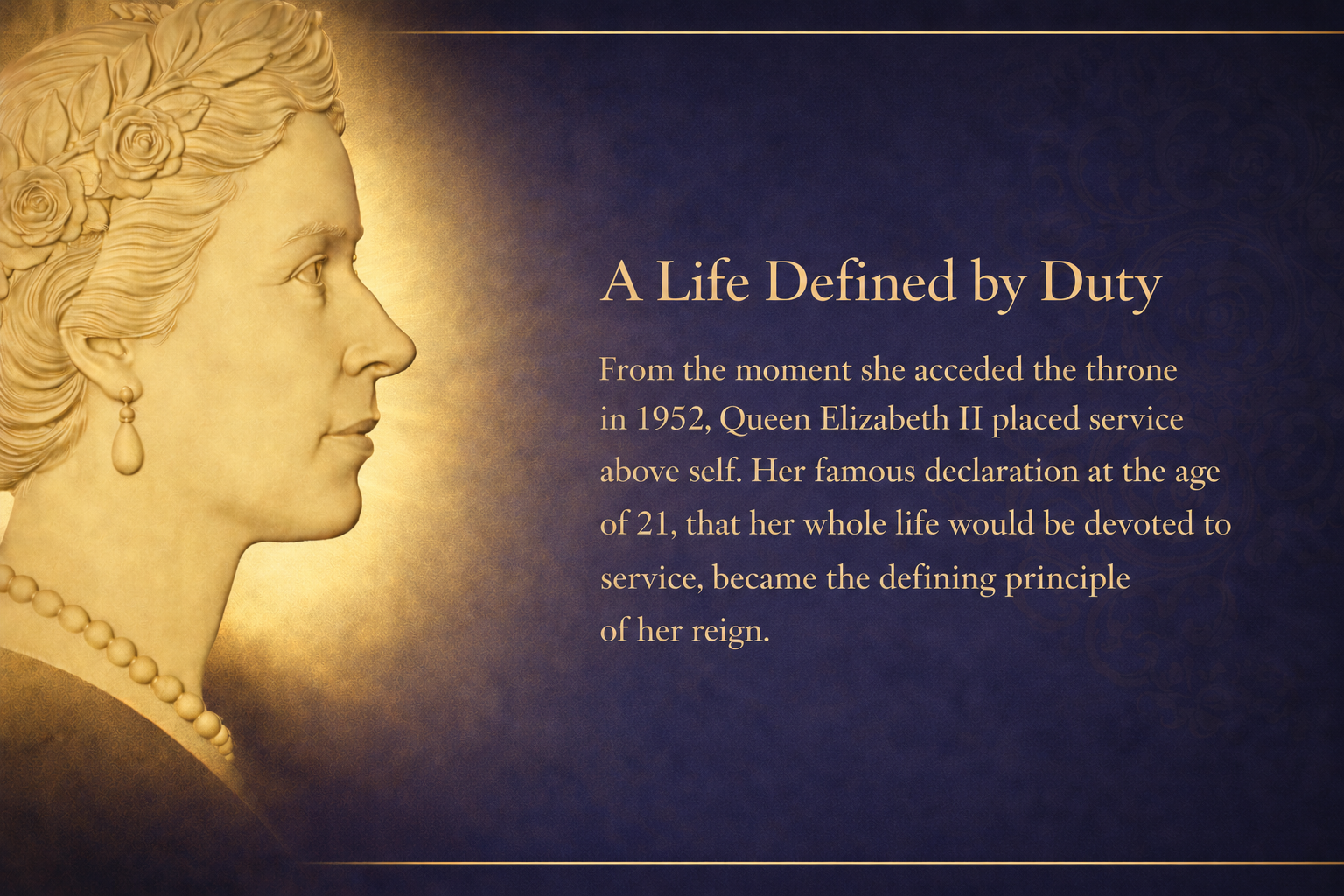
On 21 April 1926, Princess Elizabeth Alexandra Mary was born in Mayfair, London. Few could have predicted that this young princess would become Britain’s longest-reigning monarch and a figure of extraordinary global recognition.
When her uncle, King Edward VIII, abdicated in December 1936, her father ascended the throne as King George VI. From that moment, Elizabeth’s life changed irrevocably.
On 6 February 1952, while on tour in Kenya, Princess Elizabeth became queen following her father’s death. She was just 25 years old. Her Coronation took place at Westminster Abbey on 2 June 1953, in a ceremony watched by millions worldwide, the first to be televised in full.
A Reign That Defined an Era
Queen Elizabeth II reigned for 70 years and 214 days, the longest of any British monarch. Her lifetime encompassed:
-
The post-war reconstruction of Britain
-
The transformation of the British Empire into the Commonwealth of Nations
-
The Cold War and its end
-
The digital revolution
-
The transition into the 21st century
Across fifteen Prime Ministers, from Winston Churchill to Liz Truss, she remained a constant presence. Her role was constitutional, yet her influence was cultural and symbolic, embodying continuity, stability and duty.
The Platinum Jubilee and a Life of Service
In 2022, the United Kingdom celebrated her Platinum Jubilee, marking seventy years on the throne — the first time any British sovereign had reached this milestone. Public celebrations across the country reflected not only respect for her position, but genuine affection for her decades of service.
Later that year, on 8 September 2022, Queen Elizabeth II died at Balmoral Castle at the age of 96. Her passing marked the end of the second Elizabethan age and the accession of her son, King Charles III.

Why the 2026 Centenary Matters
The centenary of Queen Elizabeth II’s birth is not a state jubilee, but it is nevertheless a landmark of historic significance. It provides an opportunity to reflect on:
∙ A reign that bridged empire and modern Commonwealth
∙ A sovereign who witnessed unprecedented technological and social change
∙ A monarch whose portrait appeared on coins across the world for seven decades
For collectors, anniversaries of this magnitude hold particular meaning. The 2026 centenary represents a finite moment in time: one hundred years since the birth of a monarch whose image defined British coinage for more than half a century.
So, to mark this centenary milestone, Hattons of London has struck a new sovereign series. These new gold sovereign coins have been produced in a ‘milestone’ type of gold. Sovereign coins are customarily minted in 22 carat gold, which means they are 91.67% pure gold with 8.33% of other metals – usually nickel or copper to give the gold additional strength. However, these new coins honouring Britain’s only monarch ever to celebrate a Platinum Jubilee, have been minted in ‘Platinum-Gold’. This means they are 91.67% gold, enriched by the addition of 8.33% platinum. These coins are composed entirely of precious metals, and two of the most sought-after at that!
A new interpretation of the iconic Una and the lion design
The coins all feature an entirely new design in which a young Queen Elizabeth II takes the place of the allegorical ‘Una’, alongside the lion. This historic scene has an esteemed connection with gold sovereign coinage, first appearing on a five pound gold coin that celebrated the reign of Queen Victoria. It is fitting that these two great monarchs are now connected through the release of these commemorative coins.
These centenary coins are likely to resonate deeply with people across the United Kingdom. Just about every family has their own cherished memories of the Queen, moments of unity, comfort or pride that marked her extraordinary life of service.
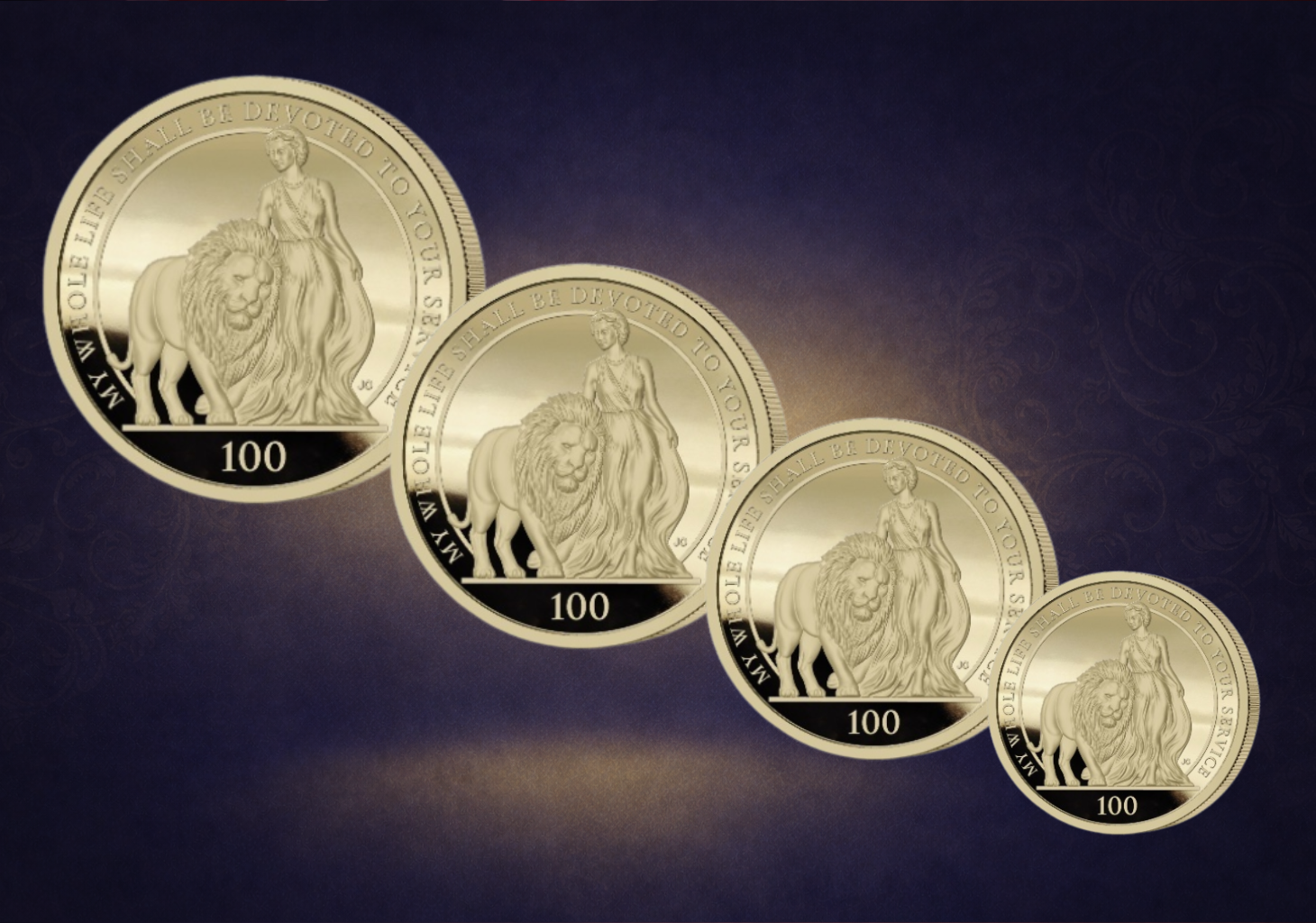
The design presents a new interpretation of the allegorical tale of Una and the Lion, a story of virtue triumphing over aggression. This symbolism reflects the personal qualities Queen Elizabeth II brought to an era of profound change.
Created by artist Jody Clark, who also designed the portrait of King Charles III on the obverse, the coin brings both sides together under the work of a single designer. This connection between mother and son adds a meaningful continuity to the piece.
The centenary of Queen Elizabeth II’s birth is a significant moment for national commemoration. With the passage of time, it offers an opportunity to celebrate her life and enduring legacy, placing her among the most important monarchs in British history.
Authorised by Tristan da Cunha and approved by the Foreign, Commonwealth and Development Office and Buckingham Palace, these coins provide a fitting tribute to mark this historic milestone.
A Lasting Numismatic Legacy
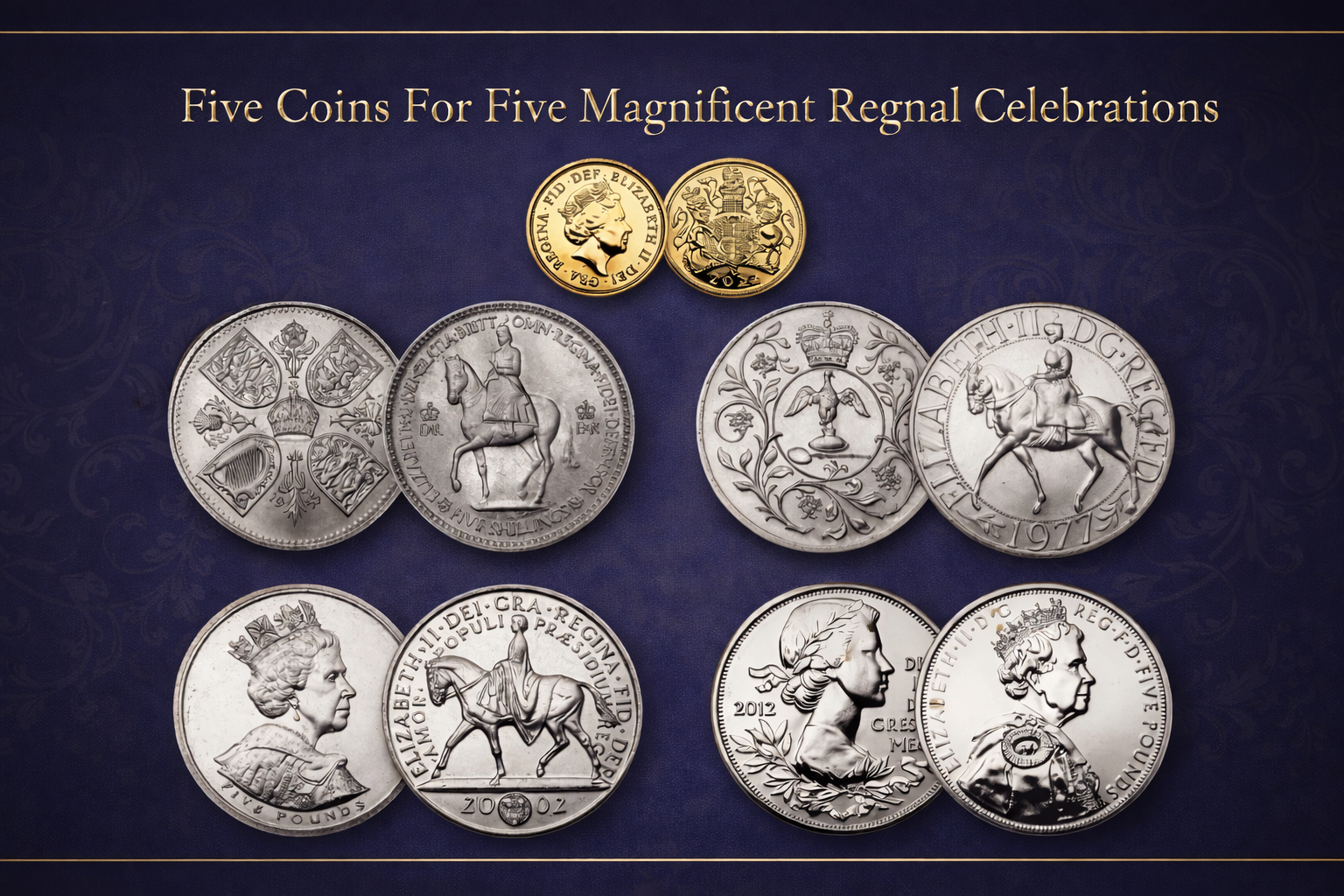
Throughout her reign, five definitive coin portraits were issued for circulation in the United Kingdom, from the youthful effigy by Mary Gillick in 1953 to the final portrait by Jody Clark introduced in 2015. No previous British monarch appeared on so many successive definitive coin designs.
Her image also appeared on sovereigns, commemorative crowns, decimal coinage and special issues across the Commonwealth, forming one of the most extensive numismatic legacies in history.
The 2026 centenary is therefore more than a date. It is a moment to consider the scale of that legacy — and the role coinage played in recording it.
Looking Back on 21 April 2026
As the centenary approached, interest in Queen Elizabeth II’s life and reign inevitably intensified. For historians, it was an opportunity for reflection. For the public, a moment of remembrance. For collectors, a milestone that would not come again.
One hundred years since her birth.
Seventy years on the throne.
A reign that defined a century.
While modest, the celebrations reflected the respect and affection the public and her family held for Elizabeth II.

